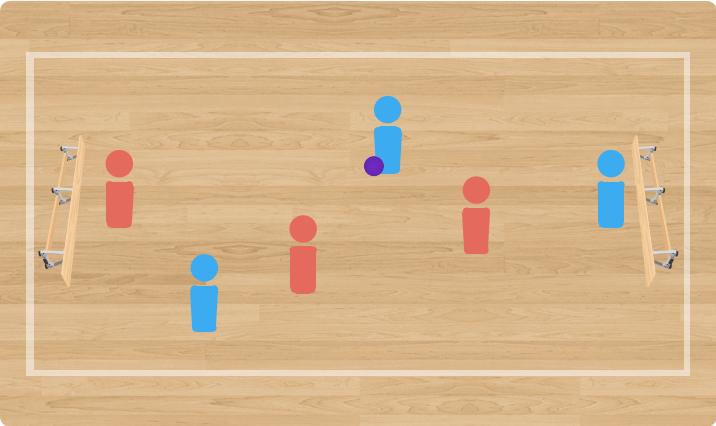
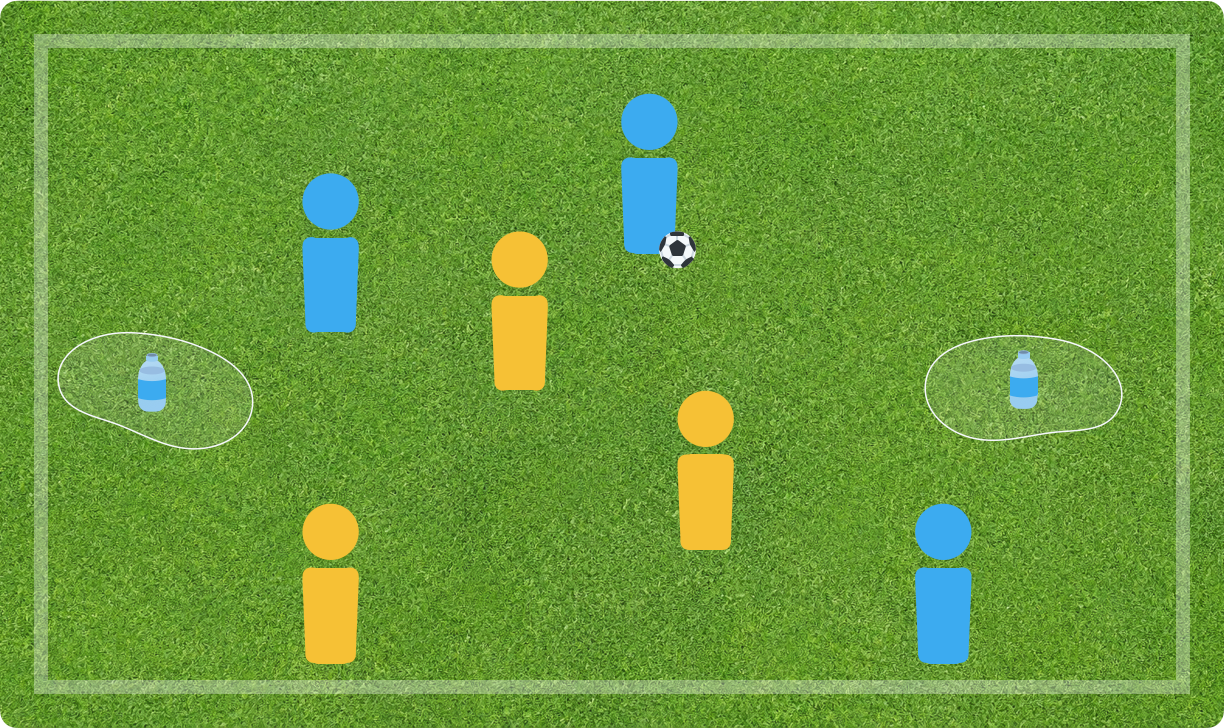
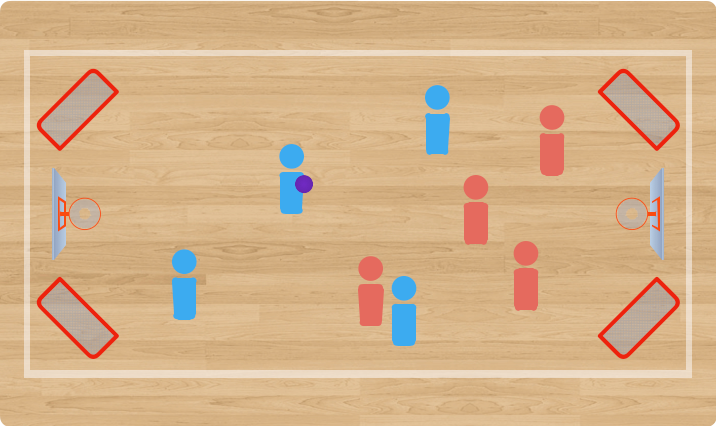
Speed Ball is an invasion game played with six goals, where a dropped ball switches play from hands to feet. Students learn to apply team offensive tactics and read the defence to decide which of the available goals is worth attacking.
No body contact
A kicked ball must remain below hip level.
Hand this to a sub and walk away. Printable pages for every build, diagrams, discussion questions, teacher notes, and assessment ideas. All in one ready-to-print package so there's no sub plan to write.
#PhysEdU Plus includes instant access to every printable game sheet in ThePhysicalEducator.com's games database. $49 a year.
Builds allow you to increase the game's complexity, one layer at a time.
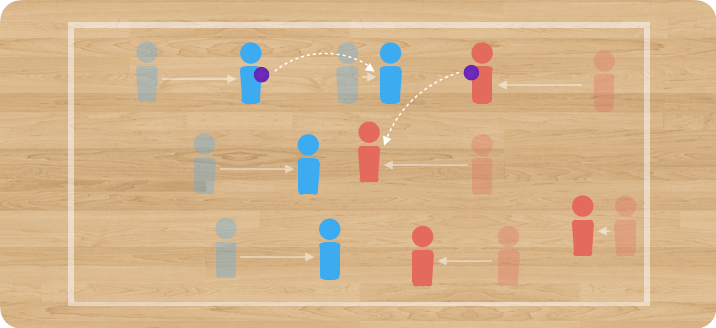
Both teams start on their own baseline, each with a ball.
On the signal, teams work to advance their ball to the opposite baseline using passes. All players must touch the ball before reaching the opposite baseline.
Teams may not disrupt each other's play.
This non-competitive build allows students to focus purely on offensive movement.
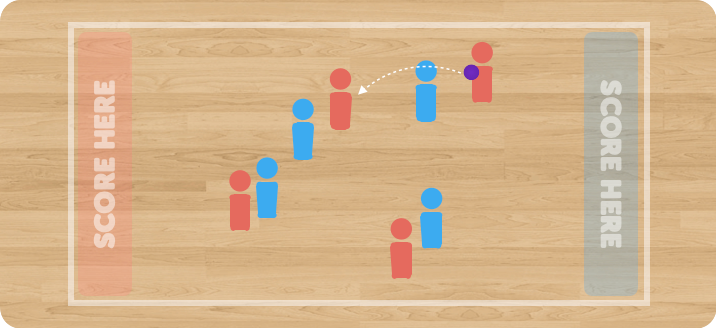
One team attempts to advance the ball while the other plays warm defence, staying an arm's distance away. Defenders may intercept passes.
If intercepted, the offensive team restarts from their baseline.
Switch roles after three attempts.
To help players understand the difference between warm and hot defence, check out the Defence Levels Posters.
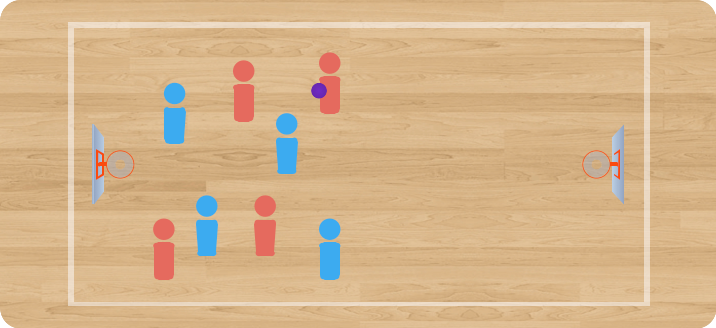
Play Speed Ball with hands only, attacking the basketball net.
Dropped balls result in turnovers. Play restarts from where the ball was dropped, with the non-dropping team making a pass to a teammate.
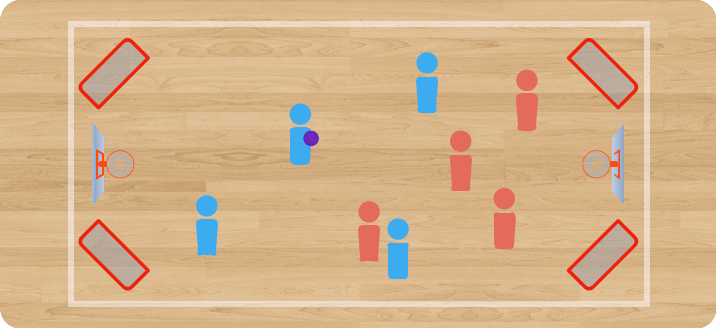
Play the full version. Dropped balls transition to soccer-style play, all six goals are active, basketball nets are worth 2 points, and hockey nets are worth 1 point.
Print the game sheet, leave it on your desk, and your sub has everything they need: the diagrams, the builds in order, what to say, and what to watch for. This one is $4. #PhysEdU Plus members get all 39, free forever, for $49 a year.
Games that build on the same tactics.